Excavation can look straightforward from the curb, but the details are underground. For an Akron-area property owner asking about what is the best base material for a driveway in ohio, the best plan starts with understanding the site rather than assuming every yard or lot can be approached the same way.
Quick answer
The important answer is the full scope, not just the digging itself. Good excavation planning covers access, utility locating, material handling, grade, drainage, compaction, safety and the condition in which the site is left for the next phase.
Why this matters around Akron, Ohio
A driveway is only as durable as the material below the visible surface. In Northeast Ohio, poor drainage and weak base preparation show up quickly as ruts, potholes, settlement and frost-related movement. On established properties, protecting driveways, structures, utilities and trees can be as important as the excavation itself.
Most driveway failures begin below the surface
Ruts and settlement are often symptoms of weak subgrade, insufficient base, poor compaction or trapped water. Adding fresh gravel can improve appearance temporarily without correcting the cause.
Drainage is part of driveway construction
A driveway should shed water rather than act like a shallow ditch. Crown, cross-slope, ditching, culverts and surrounding grade may all influence whether the surface stays firm through Ohio's wet seasons and freeze-thaw cycles.
Build the base for the finished surface
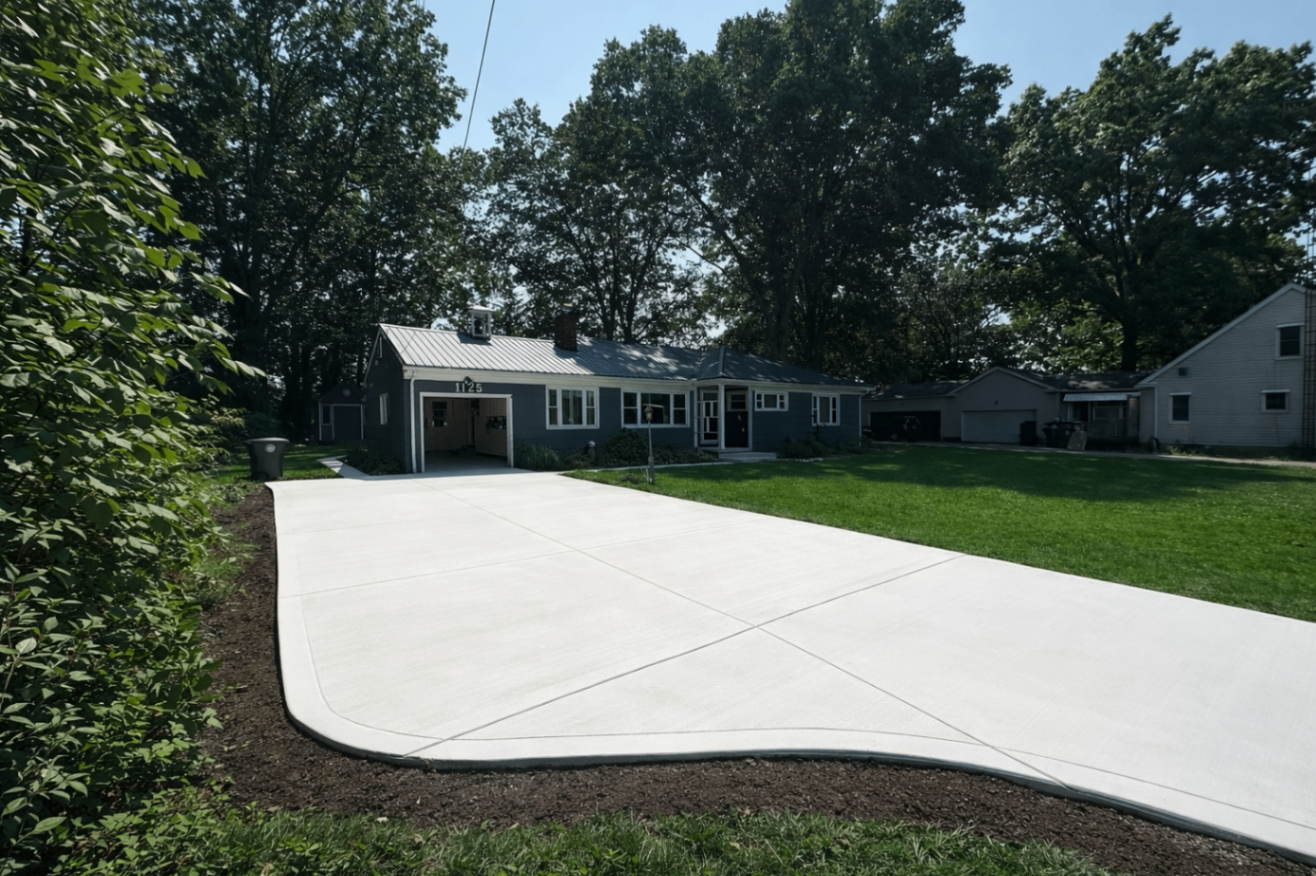
The required excavation depth and aggregate section depend on soil, traffic and whether the final surface will be gravel, asphalt or concrete. A contractor should prepare the subgrade with the long-term surface in mind.
A practical way to think about this project
Before adding another surface layer, identify whether the existing base is firm and whether water can escape. Rebuilding only the top can hide a subgrade problem for a season, while correcting base and drainage addresses why the driveway is failing in the first place.
Specific considerations for this question
A driveway base normally uses well-graded crushed aggregate that compacts into a dense, stable layer while still supporting drainage. The exact local material designation and thickness should be selected for the surface type, traffic and subgrade conditions.
Example Akron-area project scenario
A driveway with standing water may have adequate stone but incorrect finish elevation. Regrading can work if there is somewhere lower for the water to go; otherwise an outlet or drainage structure may be needed.
Compaction between lifts
Dumping a thick layer of stone and compacting only the top leaves loose material below. Building the base in controlled layers gives compaction equipment a chance to densify the full section and reduces future settlement.
Homeowner checklist before requesting a quote
Check where driveway water currently goes
Identify soft or pumping areas
Plan final surface type
Confirm base material and compaction method
Consider culverts or ditch improvements
When to bring in a professional
If the work affects drainage, foundations, utilities, structural support, large volumes of soil, steep slopes or heavy demolition, a professional site evaluation is usually worth doing early. It can reveal access limitations and scope issues before they turn into change orders or property damage.
Every excavation site has constraints that are hard to see from photos alone. For an Akron-area project, Edgewater Company can assess the property and provide a clearer scope and estimate for the work required.
Request a quote from Edgewater Company
Serving Akron and surrounding Northeast Ohio communities. Share your property address, project type, photos and desired timeline to start the estimate conversation.