Before comparing equipment sizes or contractor prices, it helps to define the outcome you actually need. When homeowners ask about can excavation fix a sloped backyard, the answer depends less on a single number and more on the site's grade, soil, access, utilities and final use.
Quick answer
Often, yes - but only when the site's grades, utilities, soil and end use support it. A site visit is the fastest way to determine whether the proposed approach is practical or whether another excavation or drainage method would perform better.
Why this matters around Akron, Ohio
Property-improvement excavation often changes how water and soil move across a site. That is why grading, drainage, access, permits and long-term stability need to be considered together rather than treated as separate details. Local lots can also have mature landscaping, older utility routes and limited machine access, which makes planning before mobilization especially important.
Start by tracing where the water is coming from
Standing water can come from roof runoff, neighboring grade, compacted soil, a low spot, a blocked outlet or a combination of several issues. The visible puddle is often the end of the drainage path, not the source.
Grading and drainage solve different parts of the problem
Regrading changes surface flow. A French drain or solid pipe handles water that needs a defined route. Sometimes one solution is enough; other properties need both. The right choice depends on elevations and where water can legally and safely discharge.
Protect the foundation first
When water is moving toward the house, the priority is to establish positive drainage away from the foundation without sending the problem onto a neighboring property. Downspouts, swales, soil elevations and hard surfaces should all be considered together.
A practical way to think about this project
Think one phase beyond the excavation. If a wall, pond, lawn or structure is coming next, give the excavator those finished requirements now. Correct elevation, compaction and drainage are easier to establish once than to repair after another trade has built over them.
Specific considerations for this question
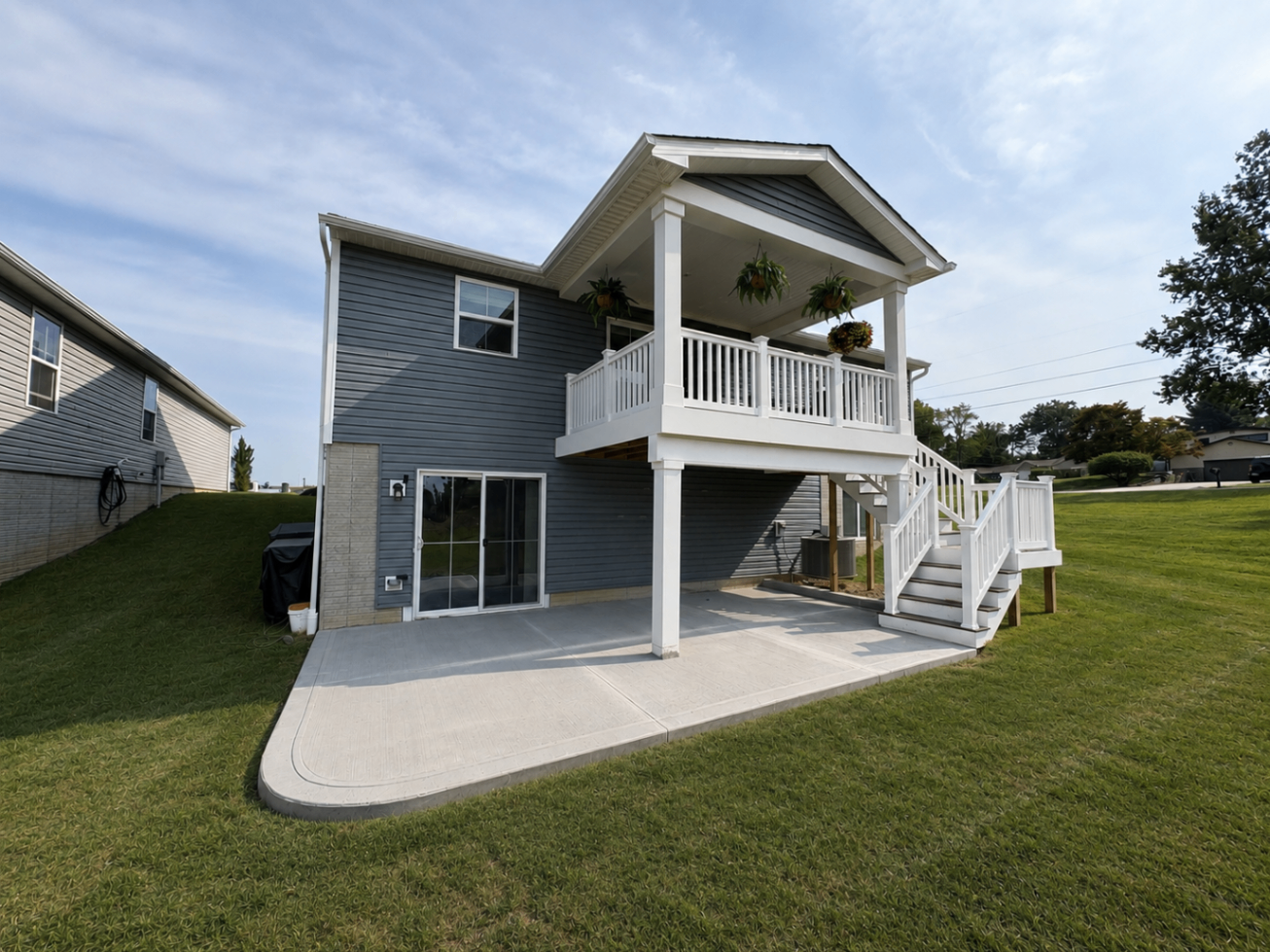
Excavation can reshape a slope into more usable terraces or gentler grades, but retaining structures and drainage may be needed to hold the new geometry. The design should keep runoff controlled and avoid creating unstable cut or fill slopes.
Example Akron-area project scenario
A homeowner planning to level a yard should decide how the flat area will be used. Lawn, patio, pool and building areas each have different base and drainage requirements.
Common earthwork mistake
Changing a slope without planning drainage can trade one problem for another. Every cut and fill decision changes where runoff travels and how soil is supported. Establish final elevations and water routes before moving large quantities of material.
Homeowner checklist before requesting a quote
Verify property and drainage constraints
Confirm whether permits or approvals apply
Plan overflow or drainage routes
Consider access for future maintenance
Define final elevations before excavation
When to bring in a professional
If the work affects drainage, foundations, utilities, structural support, large volumes of soil, steep slopes or heavy demolition, a professional site evaluation is usually worth doing early. It can reveal access limitations and scope issues before they turn into change orders or property damage.
If the project is moving from research to planning, the next useful step is a site evaluation. Edgewater Company can review access, grade, soil movement and scope so you can request a quote based on the actual property.
Request a quote from Edgewater Company
Serving Akron and surrounding Northeast Ohio communities. Share your property address, project type, photos and desired timeline to start the estimate conversation.